The frame in the front room
"Strength and dignity are her clothing, and she laughs at the time to come. She opens her mouth with wisdom, and the teaching of kindness is on her tongue." — Proverbs 31:25-26
On Monday, when I stripped the guest bed, I folded my mother's quilt and put it back on the shelf in the linen closet, and I have been thinking all week about the winter she made it.
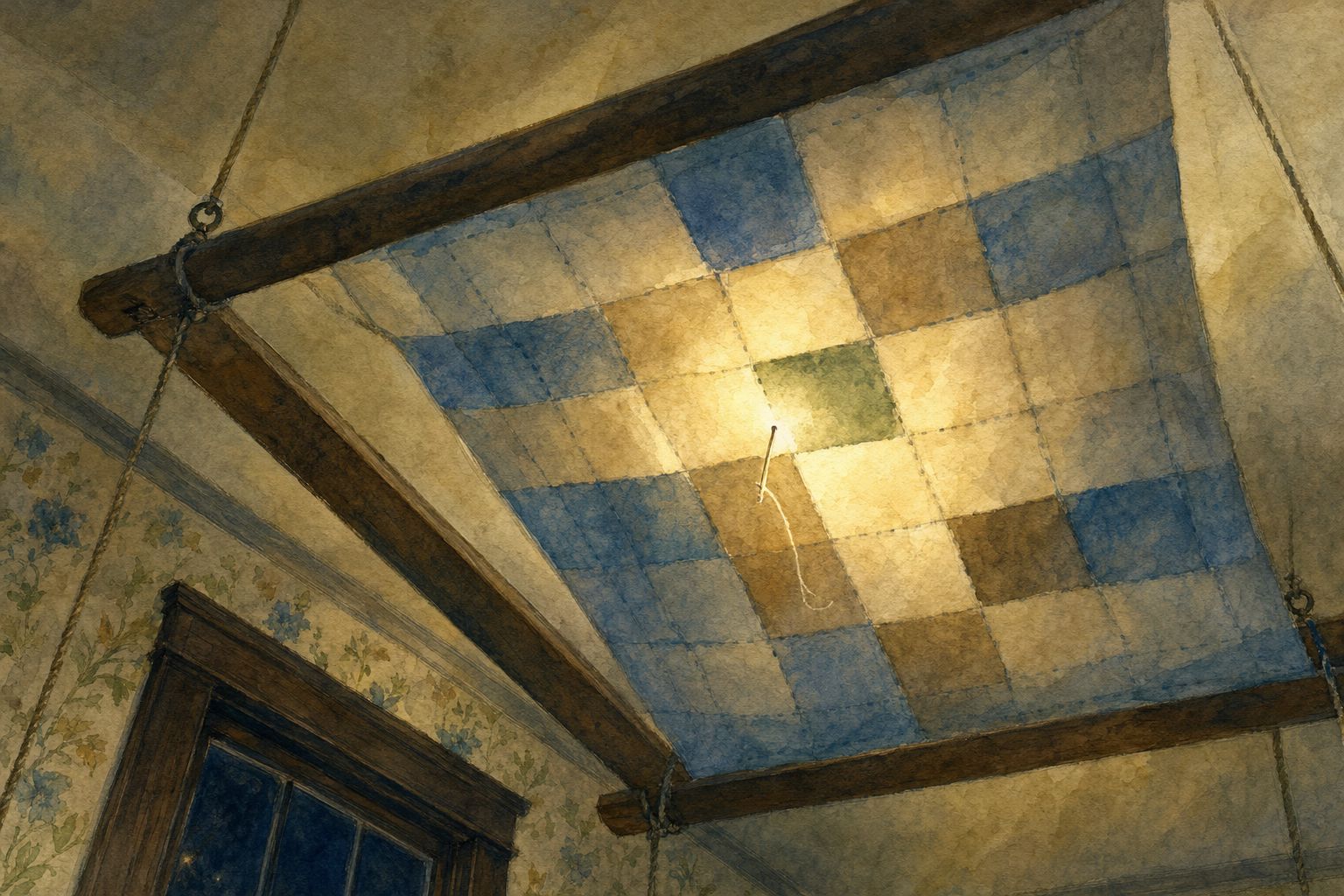
In the house on Franklin Street where I grew up, my father had put four iron hooks in the front room ceiling the first year they lived there. Every November, when the garden was put to bed, the quilting frame came down from the attic and hung from those hooks on four ropes, and it stayed there until the end of February. The whole front room became a quilt with a narrow path around the edges. At night Mama raised it up toward the ceiling so Daddy could get to his chair and read the paper underneath it, and in the morning she let it down again.
The winter I was eight she made the one on my guest bed now. It is a nine-patch, mostly blues and browns, cut from Daddy's worn-out work shirts and two of my school dresses. If I look I can still find a square of a green dress I wore to the third grade.
I spent that winter on the floor under the frame. I would lie on my back and look up at the underside of the quilt with the lamp behind it, and the light came through the cotton, and every few seconds the needle came down through the top and turned and went back up, quick and silver, like a small fish. I was not allowed to touch a needle until I was ten. At ten I was allowed to thread them, which I did with great seriousness, and the women let me believe it was a real job.
There were women. Three or four from Trinity came on Thursday afternoons that winter and sat around the frame with my mother. They talked the whole time, about everybody, and Mama talked most and laughed loudest. She was a talker in the daytime. I learned more about the town under that quilt than I learned anywhere else in my childhood, and most of what I learned was kind. I did not know until much later how unusual that was, a room full of women talking for three hours about their neighbors and the talk coming out kind.
The proverb says she laughs at the time to come. My mother laughed at a great many things, and I believe that was the reason. She did not know what was coming any more than anyone does. She made quilts against it.
My own frame stands in the sewing room upstairs, on legs, the modern way. Nothing hangs from my ceiling. But every November I think about the hooks, and the ropes, and the needle coming down through the light.
Lord, thank you for the women around the frame, and for the girl underneath it, watching.